

Introduction
In today’s rapidly evolving energy landscape-driven by renewable integration, electric mobility, and high-efficiency industrial systems-conductivity and reliability are non-negotiable. Copper busbars, especially those made from high-purity ETP-grade electrolytic copper, are at the heart of this transformation. Their unique combination of electrical performance, mechanical adaptability, and customization makes them indispensable for modern power distribution.
What Are Copper Busbars?
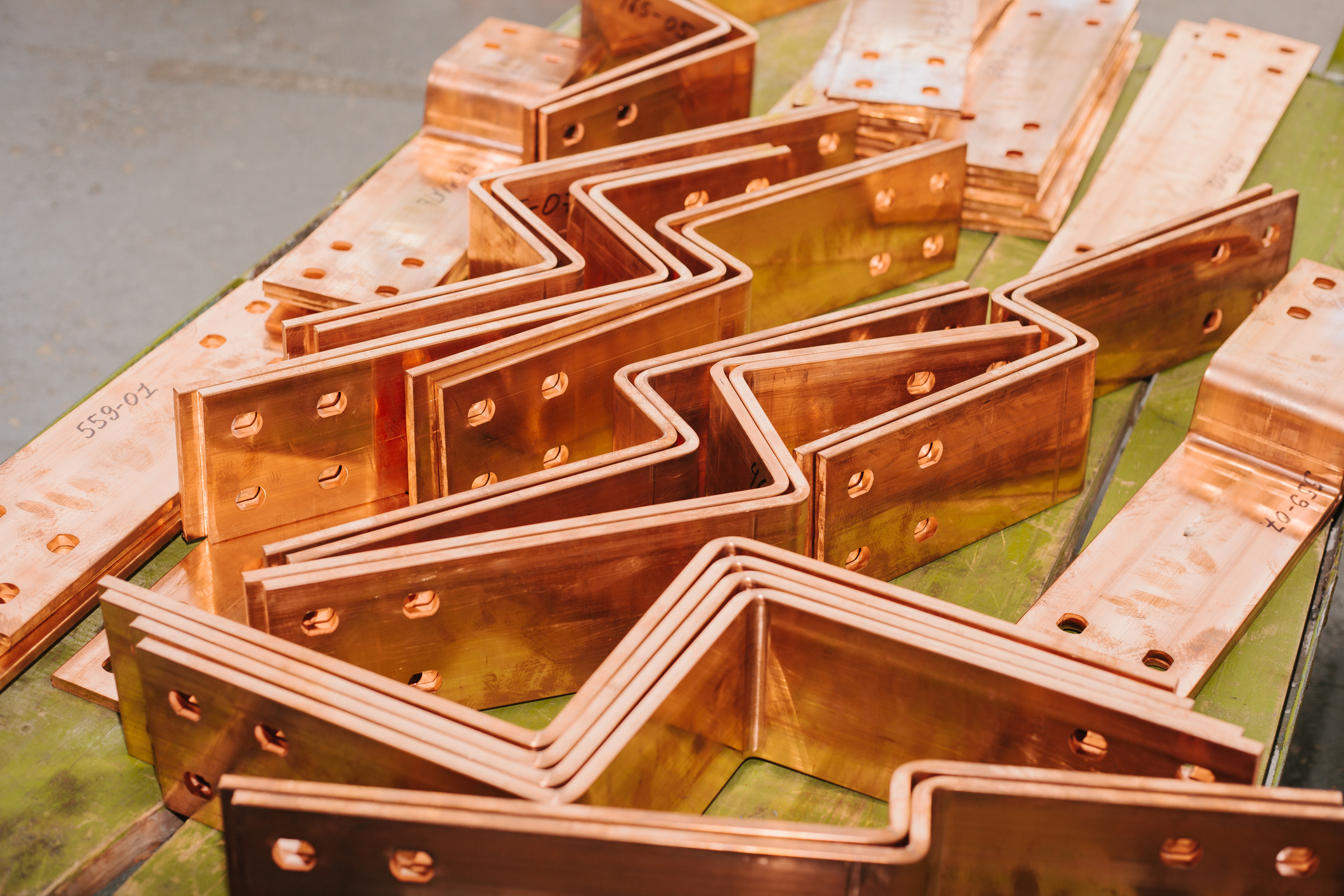
Copper busbars are flat or shaped conductors designed to carry high currents within switchboards, battery systems, inverters, and control panels. Unlike cables, busbars offer a rigid, compact, and thermally stable pathway for electricity, reducing resistance and energy losses.
Key Material Advantage: ETP-Grade Copper
ETP (Electrolytic Tough Pitch) copper offers conductivity levels exceeding 100% IACS, ensuring minimal power loss. This makes it ideal for applications where efficiency and thermal management are critical.
Benefits include:
- Exceptional conductivity for maximum energy transfer
- Formability for bends, holes, and joints without performance compromise
- Corrosion resistance with tin or silver plating options
Precision Engineering and Customization
Modern copper busbar manufacturing isn’t just about cutting and bending metal—it’s an engineered process. With dimensional tolerances as tight as ±0.1 mm, every bend and joint can be optimized to meet space constraints and thermal load requirements. Jointing methods like resistance welding or mechanical fastening ensure robust electrical continuity.
Applications Across Industries
Copper busbars find critical roles in:
- EV battery interconnects for high-density energy storage
- Power control panels for stable industrial supply
- Solar and wind inverters for renewable energy integration
- Industrial grounding and lightning protection systems
Why Busbars Over Cables?
Compared to cables, busbars provide:
- Lower energy loss through reduced resistance
- Better heat dissipation, preventing hotspots
- Neater assembly with fewer connection points
- Improved reliability under vibration and mechanical stress
Engineering Support and Services
Industry leaders in busbar manufacturing don’t just deliver metal-they deliver solutions. Services include CAD design, thermal simulations, prototyping, surface coating, and documentation compliance to meet both electrical and regulatory requirements.
Conclusion
In an age where efficiency, space optimization, and reliability are paramount, copper busbars stand as the silent workhorses powering everything from electric vehicles to renewable energy grids. For businesses aiming to optimize power transfer without compromise, they remain the gold standard—only in copper.